

Virginia Tech® home

Culture, Knowledge, and Identities
Culture, Knowledge, and Identities

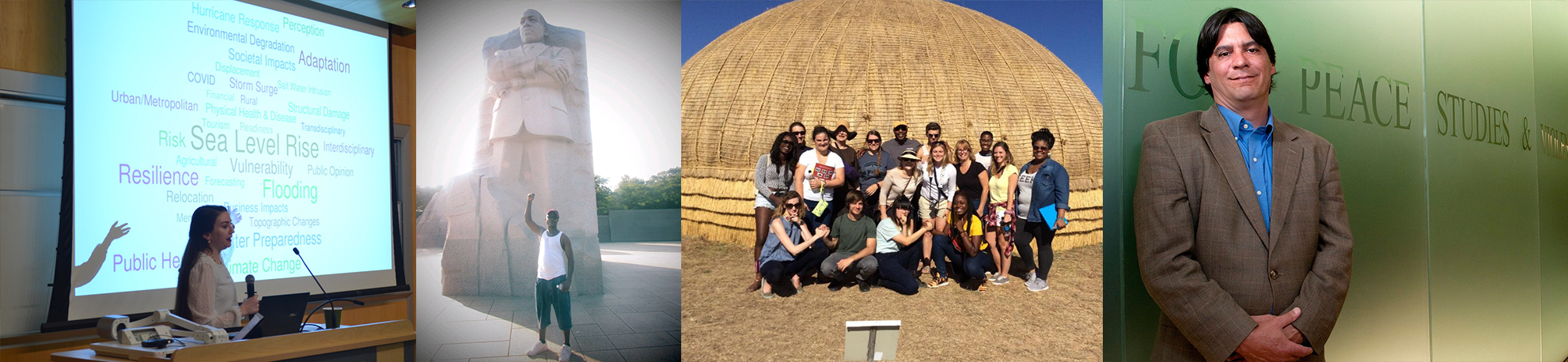
This specialization area examines culture as a blueprint for and product of human values, beliefs and related behavior. Considers knowledge as it relates to power, agency, and adaptive change. Analyzes processes by which people identify themselves and others as belonging to collective groups; therefore, we recognize identity as fluid, negotiated, intersecting, and manifested through social interaction.

Careers

  • Research Data Analyst/
    Consultant
  • Public Relations
  • Family/Court Advocate
  • Community Development
    and Non-profit
  • Market Research
  • Government Analyst
  • Teacher / Instructor
  • Education
    Administrator
  • Human Resource
    Officer
  • Recruitment /
    Talent Specialist
  • Inclusivity Consultant
  • Equal Opportunity
    Officer

Courses

An introduction to concepts, theories, methods, and major research findings in the sociology of intimate relationships. A description and analysis of research findings on the development, operation, and dissolution of intimate relationships, including how sociocultural and economic changes have shaped intimate relationships over time. Emphasis on the United States, including issues of diversity and inequalities in intimate relationships.

Social construction of race and ethnicity. Relations among ethnic and racial groups. Immigration and patterns of racial and ethnic integration. Social structures and processes that perpetuate racial and ethnic stratification. Consideration of economic, social, political, and health challenges facing racial/ethnic minority groups in U.S. society.

Introduction to the methodological tools used by anthropologists and other social scientists to study culture. Engagement with the development of, and debates about, ethnographic methods, as well as their application to case studies. Focus on sample ethnographic accounts of peoples throughout the world, as well as research techniques applicable to many different cultural environments.

Class, status, and power in society. Theories and empirical research findings on vertical and horizontal stratification in society. Class differences in behavior, values, and avenues and extent of social mobility. Cross cultural comparisons.

Focus on the social construction of gender relations. Examines how gender relations vary cross-culturally, historically, and for different categories of men and women. Explores the causes and consequences of inequality and privilege. Attention paid to the ways race, ethnicity, class, age, and sexualities shape and are shaped by gender and the relationship of gender to social institutions.

The concept of community in Appalachia using an interdisciplinary approach and experiential learning. Interrelationships among geographically, culturally, and socially constituted communities, public policy, and human development.

Emergence of old age as a social problem. Social aspects of aging in America, including the minority experience and with some cross-cultural comparisons. Social and demographic characteristics of the aged, location of aged in the social structure, and current and future social problems of old age.

The family as a basic social institution: similarities and variations in family systems, their interrelationships with other social institutions, and patterns of continuity and change.

Religion as a social structure as well as an institution; with special attention to the functions of religion for individuals, groups and societies, social organization; and the interplay between religion and other social institutions including economics and polity.

Analysis of the structure, functions, and consequences of schooling in America, the social processes affecting academic achievement, and the implications of current knowledge for educational reform.

Examine the social context(s) of popular music, including the social, economic, and political factors that influence the development of different popular music forms; authenticity within popular music genres; popular musics impact on social activity and identity; the institutions that connect popular music producers with consumers.