Mauro J. Caraccioli
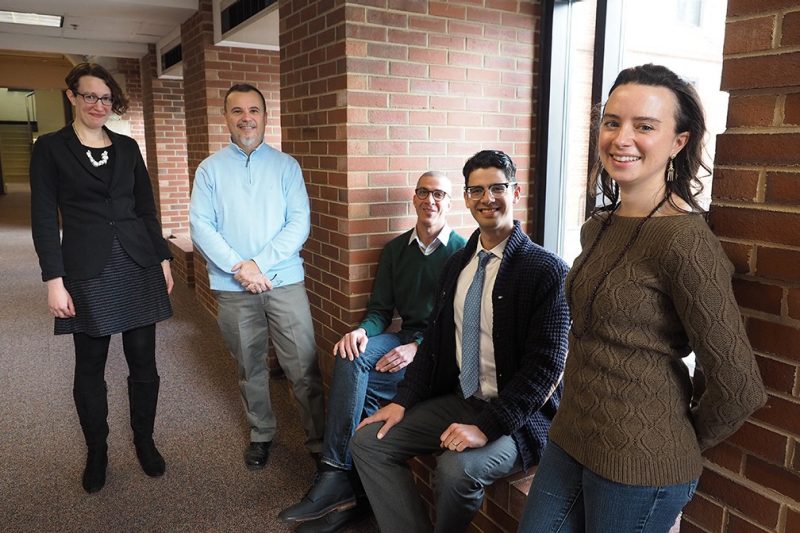
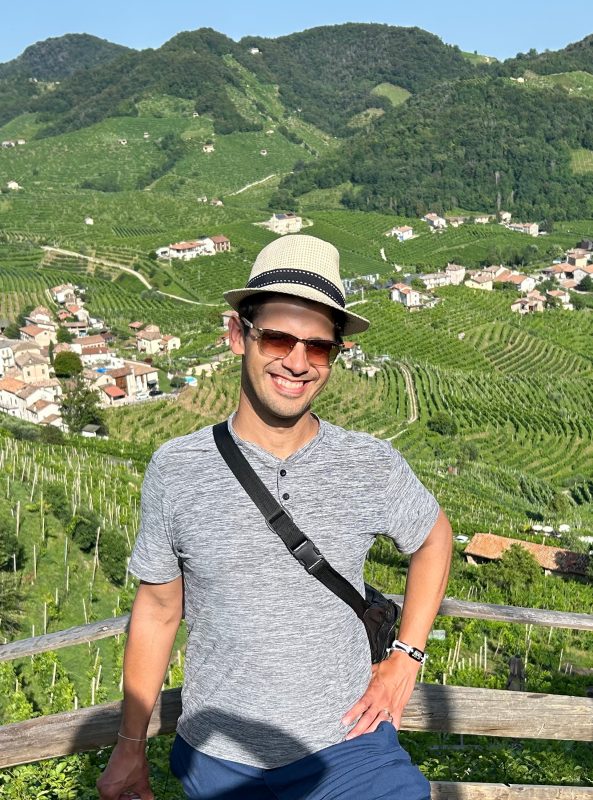
Mauro Caraccioli, Associate Professor and Core Faculty in the ASPECT Program
Department of Political Science
531 Major Williams Hall (0130)
Blacksburg, VA 24061
540-231-5310 | mauroj@vt.edu
Mauro José Caraccioli is an associate professor of political science and Core Faculty in the ASPECT Program at Virginia Tech. His interests span the history of political thought, the politics of nature and natural history, Global Latin America, and theories of scholarly reflexivity in a time of late-capitalism.
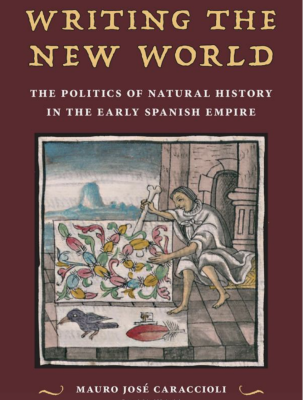
Caraccioli’s first book, Writing the New World: The Politics of Natural History in the Early Spanish Empire (University of Florida Press, 2021), examines the interplay of faith, nature, and empire in Colonial Spanish America and the natural histories produced by early modern Spanish missionaries to the New World. By tracing a distinct genre of naturalist political thought in their writings, he documents how philosophical wonder was used to broaden empirical knowledge of the New World as well as guide conquest and colonization.
His ongoing research includes: the global politics of translation and linguistic difference; feminist, indigenous, and Afro-descendent expressions of New World thought; extractivism and the geopolitics of knowledge; and narratives of planetary collapse in popular media and environmental scholarship. He is currently working on three projects: a co-edited handbook (with Einar Wigen, University of Oslo) on the study of interlingual relations in global politics; a study on the racial politics of historical writing in Spanish America; and lastly, a co-authored book (with Jack Amoureux, Wake Forest University) on the role of reflexivity in the global politics of the Anthropocene.
Caraccioli teaches courses in the History of Political Thought, Theories of Political Domination, Empire and Imperial Studies, Religion and Narrative, Global Latin America, Phenomenology and Its Others, and the Politics of Historiography more broadly. His work has been published in International Studies Review, Contemporary Political Theory, International Studies Perspectives, and History of Political Thought among other venues.
He received his Ph.D. in Political Science from the University of Florida in 2015.
- Political Theory
- International Relations
- Latin American Studies/Politics
- Postcolonial Theory
- Critical Ecology
- Ph.D., University of Florida (Political Science), 2015
- M.A., Florida International University (International Relations), 2009
- B.A., Florida International University (Philosophy), 2006
- Interim Director (Fall 2022) and Core Faculty, Alliance for Social, Political, Ethical, and Cultural Thought (ASPECT)
- Core Faculty, Jean Monnet Center for Excellence in European Union & Trans-European Space Studies
- Faculty Affiliate, Department of Religion and Culture
- Faculty Affiliate, Kellogg Center for Philosophy, Politics, and Economics
- Associate Faculty Principal, West Ambler Johnston Residential College
- Theory Section Best Book Award, International Studies Association (2023)
- Outstanding Faculty Award, Virginia Tech Residential Life (2020)
- Cesar Chavez Action and Commitment Award, Florida Education Association (2015)
- Future Faculty Development Program, Virginia Tech (2014)
- Linton Grinter Fellowship, Department of Political Science, University of Florida (2010-2014)
Published Books
Mauro J. Caraccioli, Writing the New World: The Politics of Natural History in the Early Spanish Empire (University of Florida Press, 2021).
Journal Articles
Mauro J. Caraccioli, Einar Wigen, Julia Costa Lopez, Amanda Cheney, and Jelena Subotic, “Interlingual Relations: Approaches, Conflicts, and Lessons in the Translation of Global Politics”, in International Studies Review. Online First: https://doi.org/10.1093/isr/viaa019
Mauro J. Caraccioli, “A Problem From Hell: Natural History, Empire, and the Devil in the New World”, in Contemporary Political Theory, Vol. 17, No. 4 (November 2018), pp. 473-458.
Mauro J. Caraccioli, “Pedagogies of Freedom: Exile, Courage, and Reflexivity in the Life of Paulo Freire”, in International Studies Perspectives, Vol. 19, No. 1 (February 2018), pp. 27-43.
Mauro J. Caraccioli, “The Learned Man of Good Judgment: Nature, Narrative, and Wonder in José de Acosta’s Natural Philosophy”, in History of Political Thought, Vol. 38, No. 1 (January 2017), pp. 44-63.
Mauro J. Caraccioli and Bryan Wright, “Narratives of Resistance: Space, Place, and Identity in Latino Migrant Activism.” In ACME: An International E-Journal for Critical Geographies, Vol. 14, No. 2 (August 2015), pp. 150-157, Special Issue on ‘Migration and Activism’, ed. by Nick Gill and Deirdre Conlon.
Philip E. Steinberg, Elizabeth Nyman, and Mauro J. Caraccioli, “Atlas Swam: Freedom, Capital, and Floating Sovereignties in the Seasteading Vision,” in Antipode, Vol. 44, No. 4 (September 2012), pp. 1532-1550 (Reprinted in Ricarda Vidal and Ingo Cornils (eds.) Alternative Worlds: Blue Sky Thinking Since 1900 (Bern: Peter Lang, 2014), pp. 73-104).
Mauro J. Caraccioli, “Spatial Structures and the Phenomenology and of Inter-National Identity,” Forum Contribution: “To The Things Themselves!”…and Back: International Political Sociology and the Challenge of Phenomenology,” in International Political Sociology, Vol. 5, No. 1 (March 2011), pp. 98-101.
Book Chapters
Mauro J. Caraccioli, “Early (Modern) Empires: The Political Ideology of Conceptual Domination,” in Benjamin de Carvalho, Julia Costa Lopez, and Halvard Leira (eds.), The Routledge Handbook of Historical International Relations (forthcoming, Routledge, 2021)
Mauro J. Caraccioli, “A Sorrowful Storm: Penitence and Anthropolitics in the Anthropocene,” in Daniel Bertrand Monk and Michael Sorkin (eds.), Between Catastrophe and Revolution: Essays in Honor of Mike Davis (OR Books, 2021), pp. 11-27.
Mauro J. Caraccioli, “The Earth’s Dying Body: On the Necroeconomy of Planetary Collapse,” in Caroline Alphin and François Debrix (eds.), Necrogeopolitics: On Death and Death-Making in Global Politics (Routledge, 2019), pp. 183-202.
Mauro J. Caraccioli, “Pedagogies of Freedom: Exile, Courage, and Reflexivity in the Life of Paulo Freire”, in Bryant William Sculos and Mary Caputi (eds.) Teaching Marx and Critical Theory in the 21st Century (Brill, 2019), pp. 164-186.
Mauro J. Caraccioli, “A Global Human Condition,” in Annette Freyberg-Inan and Daniel Jacobi (eds.), Human Beings in International Relations (Cambridge University Press, 2015), pp. 212-228.
Mauro J. Caraccioli and Aida A. Hozic, “Reflexivity at Disney-U: 11 Theses on Living in IR”, in Jack Amoureux and Brent J. Steele (eds.), Reflexivity and International Relations: Positionality, Practice, and Critique (Routledge, 2015), pp. 142-159.
Mauro J. Caraccioli, “Of Cursed States: Contentious Energy Narratives in Contemporary Bolivia,” in Ryan Kiggins (ed.), The Political Economy of Rare Earths: Rising Powers and Technological Change (Palgrave, 2015), pp. 197-217.
Review Essays
Mauro J. Caraccioli, Introduction to “Roundtable Review of Joshua Simon, The Ideology of Creole Revolution: Imperialism and Independence in American and Latin American Political Thought”, in H-Diplo, Vol. XX, No. 29 (March).
Mauro J. Caraccioli, Review of Kendahl Radcliffe, Jennifer Scott, and Anja Werner (eds.), Anywhere But Here: Black Intellectuals in the Atlantic World and Beyond and Brian D. Behnken, Gregory D. Smithers, Simon Wendt (eds.), Black Intellectual Thought in Modern America: A Historical Perspective, in African and Black Diaspora, Vol. 12, No. 1 (2019), pp. 113-117.
Mauro J. Caraccioli, Review of Laura Ephraim, Who Speaks for Nature? On the Politics of Science, in Perspectives on Politics, Vol 16, No. 4 (2018), pp. 1152-1153.
Mauro J. Caraccioli, “Seeing Black in Latin America”, Review of George Reid Andrews, Afro-Latin America: Black Lives, 1600-2000 (Cambridge: Harvard University Press, 2016), in International Studies Review, Vol. 19, No. 3 (2017), pp. 540-542.
- National Endowment for the Humanities Residential Institute Fellowship, “Revisiting Religion and Place in Light of Environmental, Legal, and Indigenous Studies,” University of Virginia, June 2023.
- Niles Research Grant, Virginia Tech College of Liberal Arts and Human Sciences, Project Title: “Savage Pasts, Baroque Futures,” April 2022.
- Faculty Teaching Group Grant, Virginia Tech Center for Excellence in Teaching and Learning, Project Title: “Social and Political Justice,” Fall 2021.
- Pathways Annual Team Grant, Virginia Tech Office of General Education, Program Title: “Latinx and Latin American Studies Minor,” Fall 2021
- Juneteenth Fellows Program, Virginia Tech College of Liberal Arts and Human Sciences, Project Title: “Savage Pasts, Baroque Futures,” Summer 2021.
- Center for Humanities Summer Grant, Virginia Tech Center for Humanities, Project Title: “Savage Pasts, Baroque Futures,” Summer 2021.
- Toward an Open Monograph Ecosystem (TOME) Grant, Virginia Tech Libraries, Book: Writing the New World(UF Press, 2021), Spring 2020.
Niles Research Grant, Virginia Tech College of Liberal Arts and Human Sciences, Project Title: “Interlingual Relations”, July 2019. - Curriculum Globalization Grant, Virginia Tech Global Education Office, New Course Development: “Global Latin America”, April 2019.
- Catalytic Grant, International Studies Association (ISA), Pre-Conference Workshop (with Einar Wigen, University of Oslo): “Interlingual Relations: Approaches, Conflicts, and Lessons in the Translation of Global Politics”.
- Faculty Mentoring Grant from Virginia Tech Office of the Executive Vice President and Provost, March 2017.
- Dissertation Research Grant, University of Florida, Project: Archival Research at the John Carter Brown Library, Brown University (Summer 2013).
- Atlantic Coast Social, Behavioral, and Economic Sciences Alliance Award, NSF-University of Florida’s Office of Graduate Minority Programs (2010-2011).
Featured Books
-
Article Item
Select Media Mentions
Recent Academic News
-
Article Item
Page 1 of 2 | 20 Results
News Stories
-
Article Item
-
Article Item